Northern ports; driver of Iran’s trade development with Eurasia
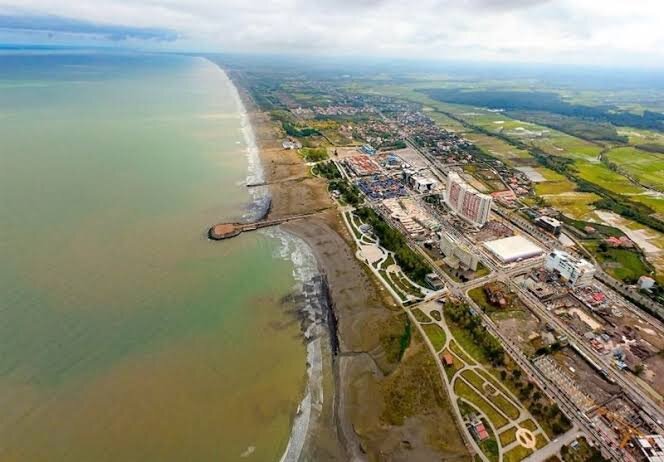
TEHRAN- CEO of Mazandaran Free Zone Organization Amin Ofoghi stated: The Mazandaran Free Zone, whose establishment began last year, is considered a valuable gift from the 14th government to the people of Mazandaran Province and has created new hope in the province.
Ofoghi added: Today I am speaking about the northern free zones and the northern ports of the country. In this region, Amir Abad Port, Nowshahr Port, Babolsar Port, as well as the separated area between Juybar and Babolsar, include an area of about 460 hectares, which in the future will be connected to the trade, tourism, and technology sectors.
Referring to the share of northern ports in the country’s maritime exchanges, he stated: About 65% of Iran’s maritime exchanges in the Caspian Sea take place in Amir Abad and Nowshahr ports, and another 27% takes place in Anzali and Caspian ports; therefore, about 92% of the country’s maritime exchanges are carried out in the ports of free zones.
The CEO of the Mazandaran Free Zone Organization continued: These ports are either sovereign or ownership-based, and what we hope to resolve today with the presence of officials is the issue of integrated management and unified governance in these ports; because integrated management can play a very important role in developing exchanges and using existing capacities.
Goal of the northern free zones; developing relations with Eurasia
Ofoghi, referring to the philosophy behind the establishment of the northern free zones, said: The goal of establishing the northern free zones is to develop relations with Eurasian countries, and our plan is to turn the northern free zones into a hub for transit and goods exchange in the CIS and Eurasia by developing logistics infrastructure, both in hardware and software, activating economic diplomacy, and international corridors.
He added: One of the tasks the government assigned to the northern ports during the recent war events and conditions was supplying essential goods, and fortunately the Mazandaran free zones succeeded in supplying about 70% of the essential goods needed by the north of the country through the northern ports.
The CEO of the Mazandaran Free Zone Organization, referring to the unused capacities of the northern ports, stated: Today we are talking about a capacity of about 30 million tons for which investment has been made, but in the best case, about 9 million tons of it is operational. That is, the infrastructure has been created and the laws also exist, but we need integrated management to activate this neglected capacity.
Ofoghi stated: We believe the northern ports can directly, by eliminating intermediary countries, conduct exchanges related to food and needed goods with Russia and Kazakhstan, which are among our most important partners in the Caspian Sea.
Referring to the experience of free zones in creating direct trade routes, he said: During the time of the late Engineer Torkan, a project was carried out in the free zones to supply goods from China without intermediaries, and we were able to import 15,000 containers through the China and Kazakhstan route into Caspian Port.
The CEO of the Mazandaran Free Zone Organization continued: I have had the honor of working in free zones for 23 years, and at that time our view was to create routes as economic defense so that we could supply goods, raw materials, and intermediate inputs.
Ofoghi added: In Anzali there were two ports; Caspian Port and Anzali Port, both of which were within the free zones. 15,000 containers with two-way cargo entered Caspian Port, but not even one container went to Anzali Port. The reason was clear; in Caspian Port, integrated management and free zone laws were applied, but in Anzali Port we were sovereign and ownership was in the hands of another body.
He said: This experience showed us how much integrated management in ports can help the development of trade exchanges.
The CEO of the Mazandaran Free Zone Organization stated: I hope today we can give the northern free zones at least one year to activate existing capacities by applying Article 65 and integrated management, and show the results in practice.
Ofoghi added: We have problems in the tanker and maritime transport sector with the Iranian flag. Many times we have taken cargo to Chabahar, the northern free zones, Solyanka Port in Astrakhan—the only port more than 50% of which Iran owns outside the country—and even toward European ports such as Hamburg, but these routes have not continued.
He considered the reason for this to be the necessity of applying the incentives and exemptions of free zones and said: For an investor and a foreign company, it is very important that the company’s activity be carried out in a free zone and benefit from legal exemptions and incentives.
The CEO of the Mazandaran Free Zone Organization continued: If we can regain the trust of investors and cargo owners, there is great capacity to activate trade routes. Two weeks ago, on the same China–Kazakhstan route, cargo entered Amir Abad Port.
Ofoghi, referring to the legal capacity of free zones, said: In free zones, we can accept ships entering from around the world under different flags without waiting and more quickly; because the law has defined free zones as enclosed customs areas.
He added: Naturally, other bodies should operate within their legal boundaries, and customs, quarantine, and standards affairs can be carried out within the free zones themselves.
The CEO of the Mazandaran Free Zone Organization said: In the current war conditions, goods must be able to enter the free zones, and the cargo owner should have a tradable warehouse receipt, and customs, quarantine, and standards should also be carried out in the same area.
Ofoghi stated: In Article 14 of this matter, permission for the entry of goods into free zones is foreseen, and in Article 24 there are issues in this regard, but in the discussion of determining duties, the legal authorities of free zones must also be considered.
Stating that cost, time, and security are the three main factors in activating trade corridors, he said: We believe that with the authority the law has given to free zones in determining tariffs and costs, we can be influential in reducing the time and cost of routes.
The CEO of the Mazandaran Free Zone Organization continued: The routes we have tested so far are very important for cargo owners, and the route must be reliable for the foreign cargo owner. We believe that if the northern free zones can reduce the multiplicity of decision-making bodies and the existing bureaucracy, the advantages of free zones can provide the basis for their role-playing; especially in the area of the country’s logistics resilience.
Ofoghi, referring to the late Torkan’s view, said: The late Engineer Torkan always emphasized that in free zones, projects should be implemented as models. If we succeed, we are ready to implement the integrated management plan for the northern ports, which the law has foreseen and the government has approved, and if successful, to apply the same model in other free zones as well.
Emphasizing the capacity of the northern ports to become third-generation ports, he said: We can turn the northern ports into third-generation ports. All over the world, production units are located in the hinterlands of ports, and this significantly reduces logistics costs.
The CEO of the Mazandaran Free Zone Organization added: In this model, raw materials are imported, production takes place, and the final product is prepared for export or entry into the mainland or target countries. We can do this in the northern ports as well, but the authority issuing the license, production certificate, and value-added certificate must be one organization.
Ofoghi stated: The law has given this permission to free zones, and we ask the government to help free zones implement this legal capacity.
Referring to the capacity of free zones for developing joint transport companies, he said: In banking, fuel, and other services, we can also succeed. Many times in joint commissions, the creation of joint transport companies has been approved, but in the past 15 years this phrase has been repeated many times, and ultimately very few of these companies have been formed, and no successful joint logistics transport company has been created.
The CEO of the Mazandaran Free Zone Organization continued: I believe that in free zones, because it is possible to register a company and a foreign investor can own 100% of the company’s shares, and there is also the possibility of land ownership and capital entry and exit, we can also launch joint logistics companies if we have management of the ports.
Ofoghi, referring to the importance of Amir Abad Port, said: Amir Abad Port is one of the very important ports of the Caspian, but unfortunately we do not have enough ships and tankers under the Iranian flag in the Caspian Sea, and for more than 20 years, a pier opposite Amir Abad has not been fully used.
He added: Today we need this capacity more than ever. The private sector investor is ready to carry out the rail project, bring it into operation, and even hand it over to the government.
The CEO of the Mazandaran Free Zone Organization continued: Two important Caspian ports, namely Amir Abad Port and Caspian Port, are connected to the rail network, but the share of rail transport is very low, especially in the north of the country, which faces traffic problems.
Ofoghi said: If the management of this matter is in the hands of free zones, we can transfer cargo from road to rail. For the foreign investor, it is also very important that regular and planned transport lines exist in Iran.
Referring to the experience of regular shipping lines, he said: We have experience with liner routes. With a shipping company on the Kazakhstan route, we had liner lines for three years, and the cargo owner anywhere in Iran knew that if he delivered his goods at a certain time, the goods would go to Kazakhstan and return at a certain time.
The CEO of the Mazandaran Free Zone Organization added: Today there are no liner lines in the Caspian Sea, while free zones have this possibility and the law has allowed them such activities.
Ofoghi further referred to the capacity for joint production with third countries and said: We have a joint request to be able to create joint production for the market of third countries.
He added: In the past, with four CEOs of free zones, we visited the free zones of other countries, and they were very interested in having joint production for the market of third countries.
The CEO of the Mazandaran Free Zone Organization continued: In this model, raw materials and technology can enter through our ports, use Iran’s laws, workforce, and energy, and foreign investment can also enter this cycle; but in some cases even the possibility of using land faces obstacles, because the Ports Organization does not agree and states that it will act according to existing regulations.
Ofoghi in the end emphasized: Our request is that a unity of command be created for the northern ports, and that the multiple decision-making bodies, instead of being stationed at the entrance of the free zones, operate within the framework of integrated and coordinated management, so that we can use the capacity of the northern free zones for the development of trade, logistics, economic diplomacy, and the economic resilience of the country.
MA
Leave a Comment